Compound Interest Explained with Real Examples (2026 Guide)

Compound interest is one of the most powerful financial concepts in the world. It is often called the “eighth wonder of the world” because it can grow small amounts of money into large wealth over time.
But most people misunderstand it or underestimate how strongly it affects savings, investments, loans, and even debt. In this guide, we will break down compound interest in simple language, show real-life examples, and help you understand how it works in everyday financial decisions.
What Is Compound Interest?
Compound interest is interest that is earned on both:
- The original amount (principal)
- The interest already earned
In simple words:
👉 You earn “interest on interest”
This is what makes compound interest so powerful compared to simple interest.
Compound Interest vs Simple Interest
To understand compound interest clearly, compare it with simple interest.
Simple Interest:
You only earn interest on the original amount.
Compound Interest:
You earn interest on:
- Original money
- Plus previous interest
The Compound Interest Formula
genui{“math_block_widget_always_prefetch_v2”:{“content”:”A = P \left(1 + \frac{r}{n}\right)^{nt}”}}
Where:
- A = final amount
- P = principal (initial investment)
- r = annual interest rate
- n = number of times interest is compounded per year
- t = time in years

Why Compound Interest Is So Powerful
Compound interest works best over time because:
- Growth accelerates every year
- Returns generate additional returns
- Time multiplies wealth exponentially
The longer you leave money invested, the more powerful it becomes.
Real Example 1: Saving $1,000
Let’s say you invest:
- $1,000
- 10% annual interest
- 10 years
Using compound growth:
A = 1000 \left(1 + \frac{0.10}{1}\right)^{10}
After 10 years:
- Your money becomes about $2,593
You didn’t add anything extra—yet your money more than doubled.
Real Example 2: Long-Term Wealth Growth
Now let’s increase time.
- $1,000 investment
- 10% return
- 30 years
A = 1000 \left(1 + 0.10\right)^{30}
After 30 years:
- Your money grows to over $17,000
This shows how time is the most important factor in compound interest.
The Role of Time in Compound Interest
Time is the most powerful factor in compounding.
Even small differences in time lead to huge differences in returns.
Example:
- 10 years → moderate growth
- 20 years → strong growth
- 30+ years → exponential growth
The earlier you start, the more powerful compounding becomes.
Compound Interest in Savings Accounts
Banks use compound interest to grow your savings.
Example:
- Savings account: 5% annual interest
- Monthly compounding
Even if growth seems small, it builds steadily over time.
Compound Interest in Investments
Investment markets like stocks and ETFs use compounding through:
- Reinvested dividends
- Capital gains
- Long-term growth
This is how investors build wealth over decades.

Compound Interest in Debt (The Dark Side)
Compound interest is not always good.
It also works against you in debt.
Credit cards use compound interest to grow your debt.
\text{Debt Growth} = P \left(1 + \frac{r}{n}\right)^{nt}
If you don’t pay on time:
- Interest adds to your balance
- New interest is charged on total amount
- Debt grows faster over time
This is why credit card debt becomes dangerous.
Example: Credit Card Debt Growth
- $5,000 debt
- 20% APR
- No extra payments
After several years, you may end up paying much more than $5,000 due to compounding interest.
Compound Interest Frequency Matters
Interest can be compounded:
- Yearly
- Monthly
- Daily
The more frequently it compounds, the faster it grows.
Example:
- Monthly compounding grows faster than yearly
- Daily compounding grows even faster
How to Use Compound Interest to Build Wealth
To benefit from compounding, you should:
1. Start Early
Time matters more than amount.
2. Invest Consistently
Even small monthly investments help.
3. Reinvest Earnings
Don’t withdraw interest or dividends.
4. Stay Long-Term
Avoid emotional withdrawals.
Example: Monthly Investing Strategy
Let’s say:
- $100 per month
- 10% annual return
- 30 years
Over time, compounding turns small monthly contributions into large wealth.
The Snowball Effect of Compounding
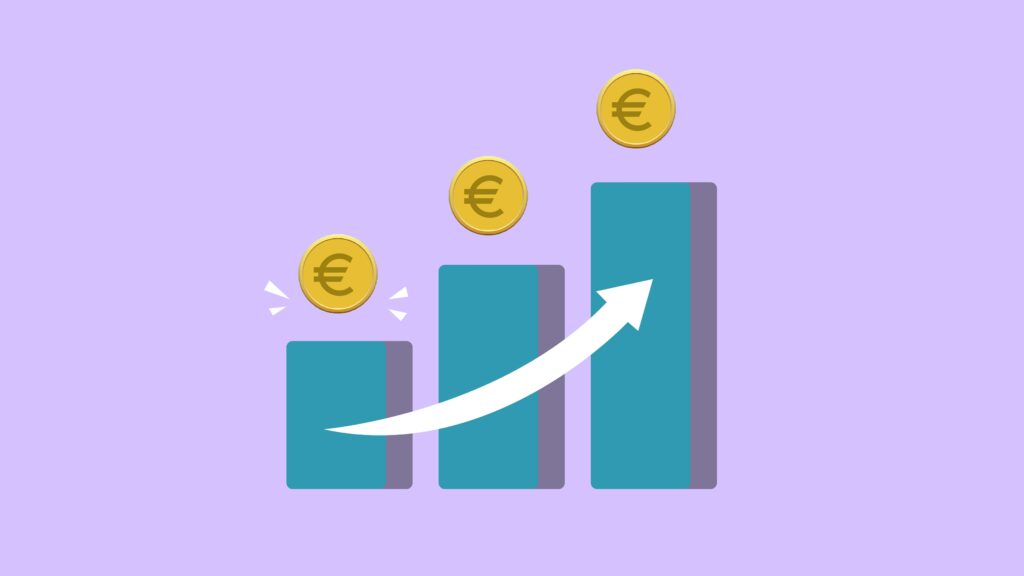
Compound interest works like a snowball:
- Starts small
- Grows slowly at first
- Becomes extremely large over time
Most people quit too early and never see the real effect.
Compound Interest in Real Life
You see compound interest in:
- Retirement accounts
- Investment portfolios
- Bank savings
- Loan repayments
- Credit card balances
Why Most People Don’t Understand Compound Interest
Common reasons:
- They focus on short-term results
- They underestimate time value
- They don’t reinvest returns
- They withdraw money too early
Powerful Rule: The Rule of 72
The Rule of 72 estimates how long money takes to double.
\text{Doubling Time} = \frac{72}{\text{Interest Rate}}
Example:
- 6% return → 12 years to double
- 10% return → 7.2 years to double
Compound Interest and Inflation
Inflation reduces purchasing power over time.
That’s why:
- Saving alone is not enough
- Investing is necessary to beat inflation
Key Mistakes to Avoid
- Starting too late
- Not reinvesting returns
- Withdrawing early
- Ignoring interest rates
- Taking unnecessary debt
How Compound Interest Builds Financial Freedom
Compound interest helps you:
- Grow wealth passively
- Build retirement funds
- Achieve long-term goals
- Reduce financial stress
\text{Wealth Growth} = \text{Time} \times \text{Return Rate} \times \text{Consistency}
Final Thoughts
Compound interest is one of the most important financial concepts you can learn. It works silently in the background, either building your wealth or growing your debt depending on how you use it.
The key takeaway is simple:
👉 Time + consistency = exponential growth
If you start early, invest consistently, and stay patient, compound interest can transform your financial future in a powerful way.